

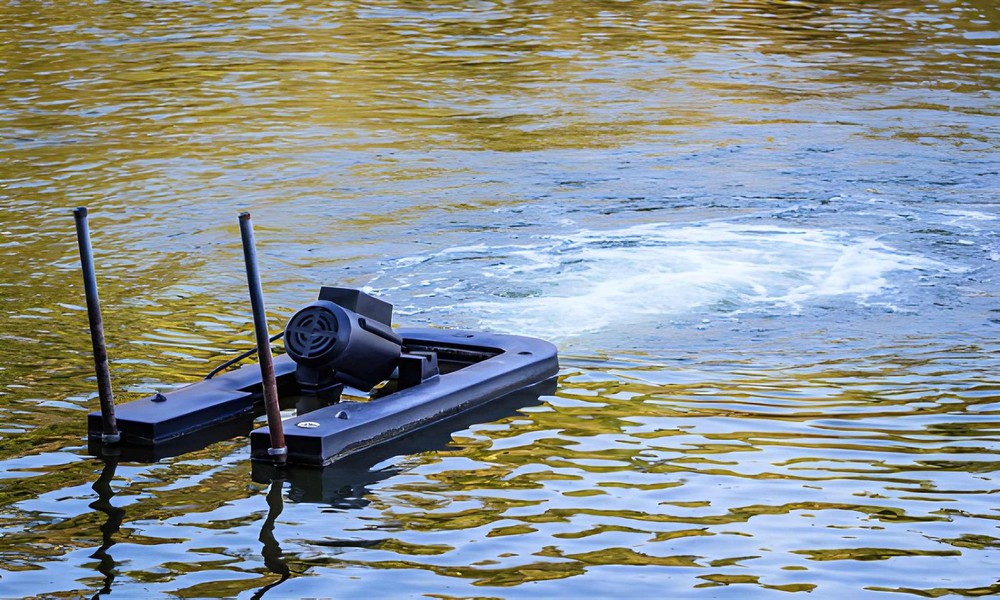
Installing and sizing a pond aeration pump system can seem a bit technical at first. But break it down, and it is manageable you are simply matching airflow to your pond’s needs and placing it effectively.
Firstly, you will need a quality airpump, which is available at reliable sellers like That Pond Guy. It is not just hype. A reliable pump runs consistently, handles pressure well, and lasts longer. In aeration, steady airflow is everything, so choosing the right pump really does make a noticeable difference over time.
Start with Pond Size
Before anything else, you need to know your pond’s volume. Guessing here is not a great idea.
- Measure length × width × depth
- Break irregular shapes into sections if needed
- Convert into gallons for easier calculation
Why does this matter so much? Because pump size depends directly on water volume. Too small, and oxygen won’t reach everywhere. Too big, and you are wasting energy.
A rough rule:
- Lightly stocked pond means around 1 CFM per 1,000 gallons
- A heavily stocked pond means slightly more airflow is needed
Depth and Fish Load
Here is where things get a bit more specific.
- Deeper ponds need stronger pumps
- More fish means higher oxygen demand
- Warm water holds less oxygen
Depth plays a bigger role than people expect. The deeper your diffuser sits, the harder the pump has to push air down. If the pump is not strong enough, airflow drops. And then aeration becomes uneven.
Choosing the Right Type of Pump
Most pond owners go for air pumps with diffusers. And that is usually a solid choice.
- Oxygen is released from the bottom
- Fine bubbles rise and spread evenly
- Water layers get mixed naturally
Systems like the Charles Austen ET series are designed for steady airflow. Not flashy, but reliable, which is exactly what you want here.
Mechanical air pumps also bring a few practical benefits:
- Improved water circulation
- Better breakdown of waste
- Reduced risk of stagnation
Nothing dramatic, just consistent improvement over time.
Planning the Installation
This step often gets rushed. And that is where mistakes happen.
A few basics to keep in mind:
- Pump placement – Keep it dry, ventilated, and ideally above water level
- Airline setup – shorter tubing means less air loss
- Power supply – Use a proper, safe connection
- Diffuser spacing – Roughly one diffuser per 2,000 gallons works well
Even a quick sketch helps. Does not need to be perfect, just enough to guide you.
Installing the System
Once everything is planned, the setup itself is not too complicated.
- Place diffusers at the deepest points
- Connect airline tubing securely
- Position the pump safely above the water level
- Switch on and check airflow distribution
You might need to adjust things slightly. That is normal. It rarely works perfectly on the first try.
Final Thoughts
It is easy to overthink or rush, and both lead to issues. Stick to basics: correct sizing, a reliable pump, and a simple layout. Once running, you will see healthier water, more active fish, and easier maintenance. Not instant, but give it time, it works.
